
CELPIP Blog
Canada Citizenship: CELPIP Accepted at CLB 4, No Expiry
Canada Citizenship: CELPIP Accepted at CLB 4, No Expiry

If you took CELPIP‑General or CELPIP‑General LS, IRCC will accept it for your citizenship application. You need a score of 4 or higher in both listening and speaking, and there’s no expiry date on that result. Meet the threshold, attach your official score report, and you’re set for the language requirement.
TL;DR:
- A CELPIP score of 4 or higher in listening and speaking is needed, and test results do not expire for citizenship, regardless of how old they are.
- CELPIP‑General LS, which only tests listening and speaking in about one hour, is more efficient than the full CELPIP‑General for citizenship applicants.
- Most applicants only need to focus on improving listening and speaking skills to reach CLB 4, which is considered sufficient for basic understanding and conversation.
- Old CELPIP scores that meet CLB 4 still count, and retesting is unnecessary unless the scores are below the threshold.
- To avoid delays, submit official test reports directly from CELPIP and book tests early, especially during peak seasons or for urgent deadlines.
Table of Contents
- What CELPIP tests are accepted for citizenship?
- What CELPIP score do you need for citizenship?
- Do CELPIP results expire for citizenship applications?
- How do you submit CELPIP results with your citizenship application?
- What are the test logistics and timing you should plan for?
- How do you prepare for the listening and speaking sections?
- A quick reality check on CELPIP and citizenship
- Get to CLB 4 faster with structured CELPIP practice
- Where to verify these requirements yourself
- Sources
- FAQ
What CELPIP tests are accepted for citizenship?
IRCC accepts two versions of CELPIP for citizenship: CELPIP‑General and CELPIP‑General LS. Both come from the same testing body and use the same scoring scale, so neither one gives you an advantage on paper. The difference is what each test measures and how long you’ll spend in the room.
Citizenship only asks for proof of listening and speaking ability. That makes CELPIP‑General LS the more efficient pick for most applicants, since it drops the reading and writing sections entirely and focuses on exactly what IRCC needs to see. Here’s how the two compare:
- CELPIP‑General LS: listening and speaking only, roughly one hour, built specifically around citizenship and similar requirements.
- CELPIP‑General: all four skills (reading, writing, listening, speaking), roughly three hours; it qualifies for citizenship too, but you’ll be tested on skills you don’t strictly need for this application.
If you already have a full CELPIP‑General report from a previous PR application, it still works. You don’t need to book the LS version just because it’s shorter. Check the CELPIP official test pages for current fees and test dates before you book.
What CELPIP score do you need for citizenship?
The number to remember is 4. IRCC requires a score of 4 or higher in listening and speaking on the CELPIP scale, which lines up with Canadian Language Benchmark (CLB) level 4. This applies to adult applicants between 18 and 54 years old; younger and older applicants aren’t required to submit language test results at all.
CLB 4 in plain terms: it’s described as “adequate knowledge”, meaning you can follow simple instructions, hold a basic conversation about everyday topics, and use straightforward grammar without needing to reach for advanced vocabulary.
What that looks like in real life:
- Understanding directions, appointment details, or a coworker explaining a task.
- Chatting about weather, weekend plans, or a grocery run without preparing your sentences in advance.
- Using simple past, present, and future tenses correctly, even if you occasionally stumble on more complex structures.
Your CELPIP score report lists listening and speaking as separate scores, each on its own line. Both need to hit 4 or higher. A strong writing score won’t compensate for a low speaking score, so check those two numbers specifically before you submit anything. If either one is below 4, our guide to what “adequate knowledge” means breaks down exactly which skills to target.
Do CELPIP results expire for citizenship applications?
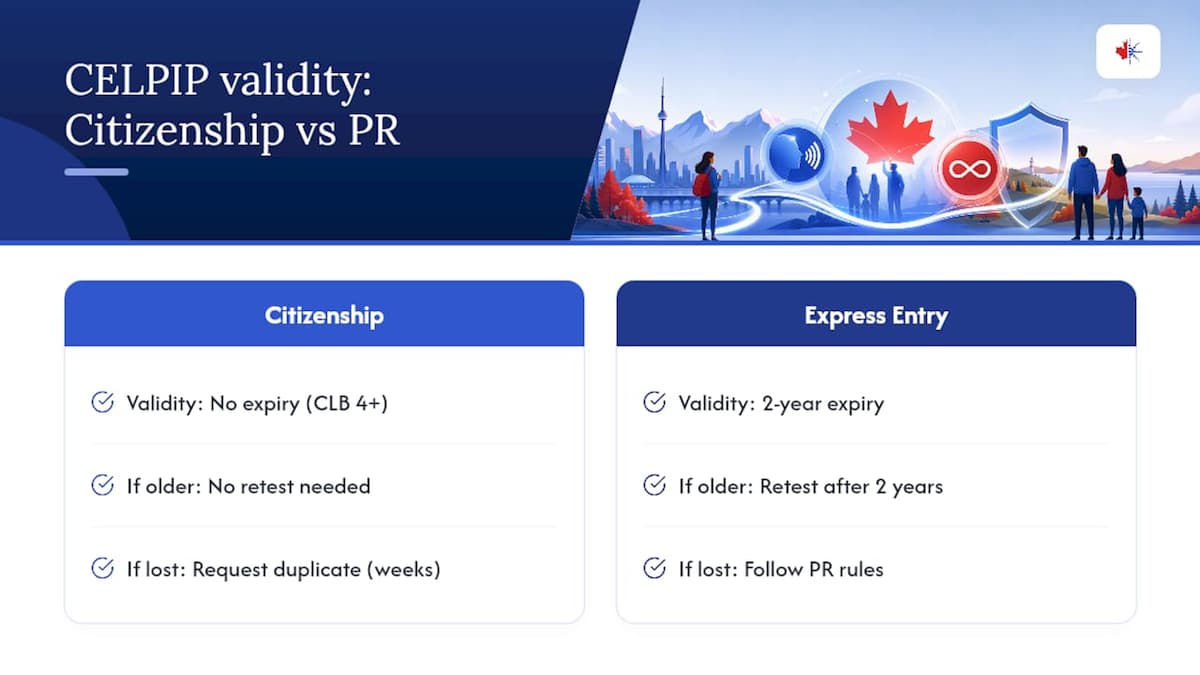
No. This is the single biggest point of confusion I see, and it costs people money they didn’t need to spend. IRCC does not put an expiry date on language test results submitted for citizenship. If your CELPIP report meets CLB 4, it’s valid no matter how old it is.
The confusion comes from Express Entry, which does have a two‑year validity window for permanent residence applications. That rule doesn’t carry over to citizenship. If you tested five years ago at CLB 4 or higher, that same report works today, and retesting would just be an unnecessary expense.
Pro Tip: Before assuming you need a new test, dig up your old CELPIP report. If it meets the score and you still have the document, you’ve already cleared the language requirement. Save your money for something else.
If you’ve lost your original report, contact CELPIP directly to request an official duplicate. Build in a few extra weeks for that request before you submit your application, since paper processing takes longer than a fresh online booking.
How do you submit CELPIP results with your citizenship application?
Getting the right document attached the first time saves you from a request for more information later, which can add months to processing. Here’s the process:
- Get your official score report directly from CELPIP, either the original paper copy or the certified digital version tied to your test account.
- For online applications, upload a scanned PDF of the official report. IRCC accepts scanned copies as long as the full document is legible and unaltered.
- For paper applications, mail the original report or an official duplicate requested from CELPIP. Don’t send a photocopy you made yourself. IRCC wants a document that came directly from the testing body.
- If your results are lost, request a replacement from CELPIP before you submit your application rather than after. A missing document is one of the most common reasons applications stall.
For a fuller breakdown of what counts as acceptable evidence and how to handle each document type, our checklist on English evidence for citizenship walks through the paperwork in more detail.
What are the test logistics and timing you should plan for?
Booking your test with enough lead time matters more than most applicants realize, especially if you’re applying against a personal deadline like a job offer or a passport renewal.
- Test length: CELPIP‑General LS runs about one hour; CELPIP‑General runs about three hours for all four skills.
- Results turnaround: CELPIP advertises fast online results, typically available within days of your test date, though mailed official reports take longer to arrive.
- Booking and ID: you’ll need valid government photo identification to sit the test, and test centres fill up during peak immigration seasons, so book early.
- Fees: these change periodically, so check the CELPIP official pages for the current rate before you commit to a date.
If you’re mailing a paper citizenship application, build in extra weeks for the original report to travel by post. Online applicants have it easier since a scanned PDF uploads instantly.
How do you prepare for the listening and speaking sections?
You don’t need to study everything. Citizenship only tests listening and speaking, so pouring hours into writing drills is wasted effort here. Focus narrowly and you’ll move toward CLB 4 faster.
- Daily short speaking drills: record yourself answering a prompt for 60 to 90 seconds, then compare your answer to a model response. Prioritize clarity and actually answering the question over fancy vocabulary.
- Everyday listening practice: use Canadian radio announcements, short news clips, or casual conversations, and practise jotting down key details as you listen.
- Diagnostic testing first: a diagnostic mock exam tells you exactly which subskill is holding your score back, so you’re not guessing where to spend your time.
- Protect your paperwork: once you have a score report that clears CLB 4, keep the original PDF and store a backup copy somewhere safe.
Pro Tip: Speaking scores often hinge on hesitation, not grammar mistakes. If you’re pausing mid‑answer to search for the “correct” word, you’re losing marks for fluency even when your grammar is fine. Practise answering fast and imperfectly rather than slow and polished.
If pronunciation clarity is a sticking point, a targeted English accent diagnostic can pinpoint specific sounds that are costing you marks. And for structured listening practice that mirrors what CELPIP actually tests, our listening guide covers note-taking techniques that carry over directly to test day.
A quick reality check on CELPIP and citizenship
Here’s what I want you to walk away with: your old CELPIP score probably still counts, and citizenship asks for less than most applicants assume. The mistake I see most often is people applying Express Entry’s two‑year rule to citizenship out of habit, then paying for a test they didn’t need. Confirm your score against IRCC’s official language proof page, and if your listening or speaking sits below CLB 4, put your energy into focused practice rather than a full retest of every skill.
— Reza
Get to CLB 4 faster with structured CELPIP practice
This platform provides extensive practice resources including multiple full mock exams and thousands of practice questions targeting listening and speaking skills, supported by AI-driven instant feedback on speaking responses to help identify areas for improvement. A diagnostic test indicates your current proficiency and creates a study plan tailored to your needs.
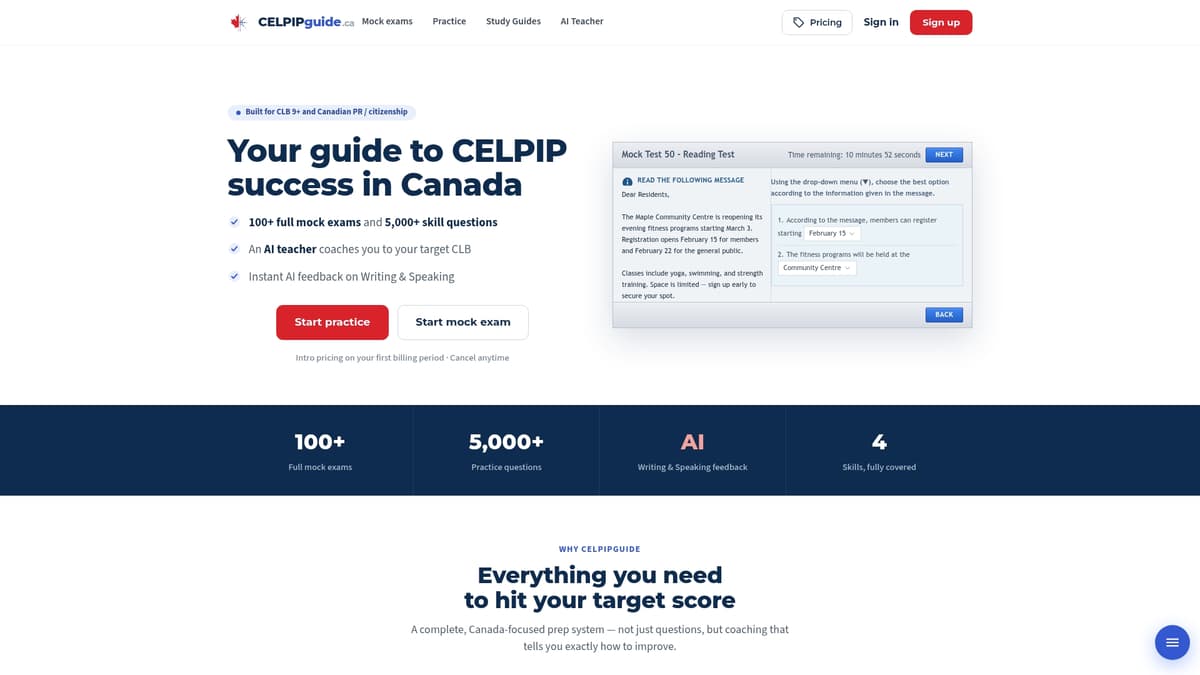
For citizenship applicants who just need listening and speaking at CLB 4, that focus matters. You’re not wasting hours on reading and writing drills you don’t need. Start with a diagnostic, work through the personalized study plan that follows, and use code BLG30 for 30% off the Plus plan (currently $29.99 one time) when you’re ready to commit. You can also browse full-length mock exams first if you want to see where you stand before subscribing.
Where to verify these requirements yourself
Confirm everything directly at the source before you apply. Start with IRCC’s step 2 results table for accepted tests and scores, and check CELPIP’s official citizenship page for current test details and fees.
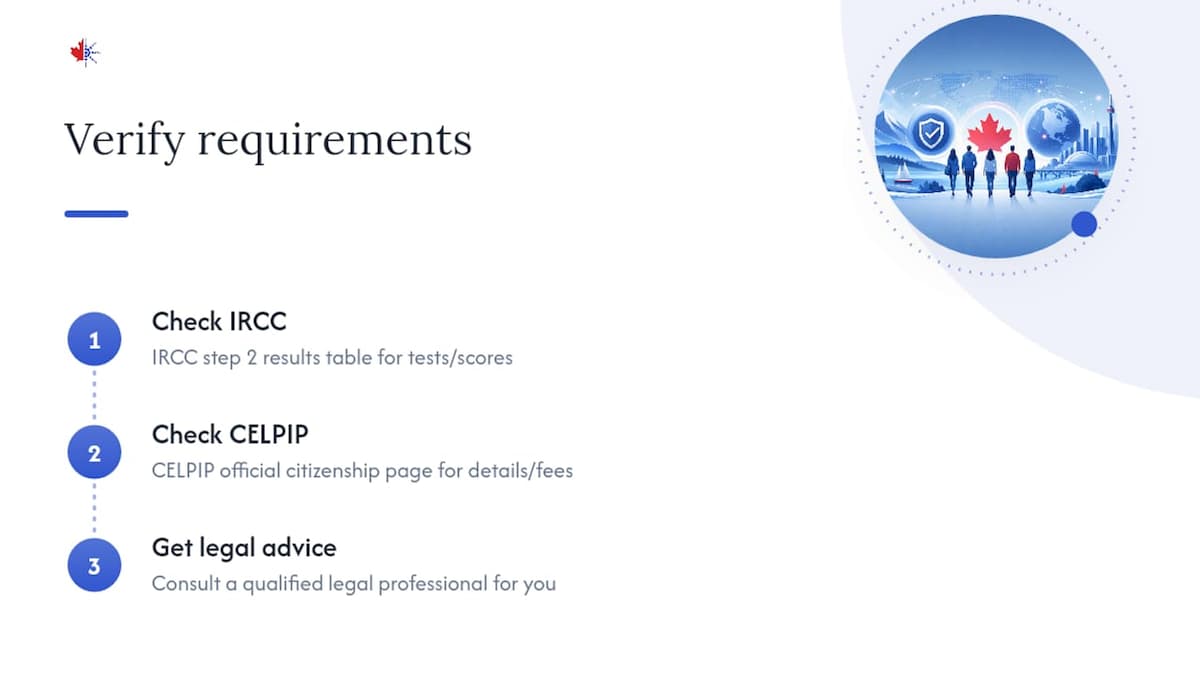
This article is general information, not a substitute for advice from a qualified lawyer. Consult a qualified legal professional about your own circumstances before acting on anything here.
Sources
FAQ
How much CELPIP score is required for Canadian citizenship?
You need 4 or higher in both listening and speaking on the CELPIP scale. This applies to applicants aged 18 to 54; reading and writing scores aren’t evaluated for citizenship purposes.
What is CLB 4 for citizenship?
CLB 4 is IRCC’s “adequate knowledge” benchmark, meaning you can understand simple instructions, take part in everyday conversations, and use basic grammar correctly.
What is a good CELPIP score for Canadian PR or citizenship?
For citizenship, a score of 4 or higher in listening and speaking meets the requirement outright. Express Entry applicants pursuing permanent residence typically need higher CLB levels depending on the program, so don’t assume PR and citizenship thresholds match.
How long are CELPIP results valid for citizenship?
There’s no expiry date for citizenship applications. A CELPIP report that meets CLB 4 remains valid no matter how many years have passed, unlike Express Entry’s two‑year validity rule.
Can I use Celpipguide to prepare specifically for the citizenship language requirement?
Yes. Celpipguide’s diagnostic test and mock exams focus on listening and speaking performance, which lines up directly with what CELPIP‑General LS and citizenship applications require.