
CELPIP Blog
5 Task Templates to Fix CELPIP Listening Note Taking Fast
5 Task Templates to Fix CELPIP Listening Note Taking Fast

Yes, you can take notes during the CELPIP listening test, and you should. The single highest-impact habit is a consistent shorthand system built around question keywords, jotted down the moment you spot them. The audio plays only once, so every word you scribble needs to earn its place on the page. Skip full sentences. Capture the bones of the answer instead.
TL;DR:
- Developing a shorthand system that focuses on key nouns, numbers, and signal words speeds up note-taking and reduces unnecessary writing during the test.
- Preparing task-specific templates for announcements, conversations, and directions helps organize notes efficiently and minimizes mistakes.
- Practicing timed mock exams repeatedly under test conditions improves speed, accuracy, and confidence, especially when using error logs to refine shorthand.
- Avoiding full sentences and cluttered layouts in notes prevents wasting time on review and ensures quick comprehension during the test.
- Using official practice tools and AI feedback helps identify weaknesses, adapt shorthand strategies, and maintain steady performance across multiple attempts.
Table of Contents
- Build a fast shorthand system before test day
- Task-by-task templates for every CELPIP listening question
- Practice drills that build real speed under test conditions
- Common note-taking mistakes and how to fix them fast
- How CELPIPguide helps you put these techniques into practice
- Staying steady when the recording starts
- Practise these exact drills with CELPIPguide
- Sources
- FAQ
Build a fast shorthand system before test day
I used to write too much. My notes looked like a diary entry, and by the time I finished a sentence, the recording had moved on to the next point. The fix wasn’t writing faster. It was writing less, and writing the right things.
Your shorthand should skip verbs of being and articles, and focus on nouns, numbers, connectors, and signal words instead. Those are the pieces questions actually ask about. “The meeting was rescheduled to March 5th because the manager was unavailable” becomes “mtg → 5/Mar (mgr unavail)”. You’ve kept everything a question could ask about and dropped everything it can’t.
A few abbreviations I use every single time:
- People: ppl, mgr, cust, emp
- Numbers: 50k for 50,000, ~30 for approximately 30
- Dates: 5/Mar instead of March 5th, keeping day before month for speed
- Verbs of action: req (request), conf (confirm), canc (cancel), rej (reject)
- Connectors and signal words: but, bc (because), → (leads to or results in), vs (versus)
Keep your set small. Somewhere between 8 and 12 core symbols is the sweet spot: enough to cover the recurring patterns in CELPIP’s listening guide, not so many that you hesitate mid-recording trying to remember what a symbol means. Practise the same set every time you drill so it becomes automatic rather than something you’re inventing under pressure.
Pro Tip: Write your shorthand legend on a scrap of paper before every practice session until its second nature, then stop needing the cheat sheet entirely.
Task-by-task templates for every CELPIP listening question
Each CELPIP listening task rewards a slightly different note layout, and having the format ready before the audio starts saves you from deciding on the fly.
- Announcements and information: sketch five columns in your head or on paper: who, what, where, when, cost. Most announcement questions map directly onto one of those fields, so filling them in as you hear them means the answer is usually already written down.
- Conversations: label the two speakers A and B the instant they start talking, then jot each person’s stance or opinion next to their letter, followed by any action they agree to take. This stops you from mixing up who said what, which is the single most common conversation-task error.
- Problem and solution: use a simple P → A → O chain: problem, proposed action, outcome. Most problem-solution clips follow this exact structure, so the chain gives you a ready-made map of the whole recording.
- Maps and directions: number each step as you hear it, note landmarks by their first letter, and use L and R for left and right turns instead of writing the full word.
- Multiple-choice questions: underline the keyword in the question stem before the audio starts, then put a small tick beside any answer choice that matches something in your notes as you hear it.
These formats aren’t rigid rules. They’re starting shapes you adjust once you’ve run a few timed drills and see which fields you actually use.
Practice drills that build real speed under test conditions
Shorthand only sticks if you rehearse it under the same conditions you’ll face on test day: one play, no pausing, no rewinding.
- Start with focused drills of manageable length: play a short clip once, answer targeted questions, then check your notes against what you actually needed.
- Once your shorthand feels steady, move to full-part timed mocks that mirror the real section length and pacing.
- Keep an error log. When you miss a question, write down what your notes were missing and adjust your shorthand set for next time.
- Use CELPIP’s free listening practice test for early single-play drills before moving to a full mock.
- Check your raw scores against the official CLB mapping so your practice targets connect to a real benchmark rather than a guess.
Progress here isn’t dramatic week to week. It’s the accumulation of small corrections, each one making your next set of notes a little more useful than the last.
Common note-taking mistakes and how to fix them fast
Most low listening scores trace back to a handful of repeat mistakes, and each one has a quick fix.
Writing full sentences instead of fragments is the biggest time sink, so retrain yourself to jot noun and verb pairs only. Over-recording irrelevant detail happens when you write down everything instead of following the question stem, so read the stems first and let them tell you what actually matters. Untidy layout slows down your review in the seconds before you answer, so adopt columns, clear labels, and the same simple legend every time. Panic handwriting shows up when the audio starts and your hand tenses up, so rehearse a calm breathing routine before every section until it’s a habit rather than an afterthought.

How CELPIPguide helps you put these techniques into practice
Reading about shorthand is one thing. Running it under timed, single-play conditions is another, and that’s where CELPIPguide’s listening guide and its full mock exams come in. Celpipguide claims over 100 full mock exams and 5,000 practice questions built to CEFR standards, with an AI teacher that reviews your responses and points to specific weak spots. Pair a timed listening drill with the platform’s study plan generator, log where your shorthand broke down, then rebuild your symbol set around the gaps it surfaces.

Staying steady when the recording starts
I run the same one-minute checklist before every listening section: pen ready, legend fresh in my head, one slow breath, question stems read first. When the audio starts, I write only what answers a stem, nothing else. That discipline, more than any fancy symbol, is what keeps my notes usable when the pressure is on.
— Reza
Practise these exact drills with CELPIPguide
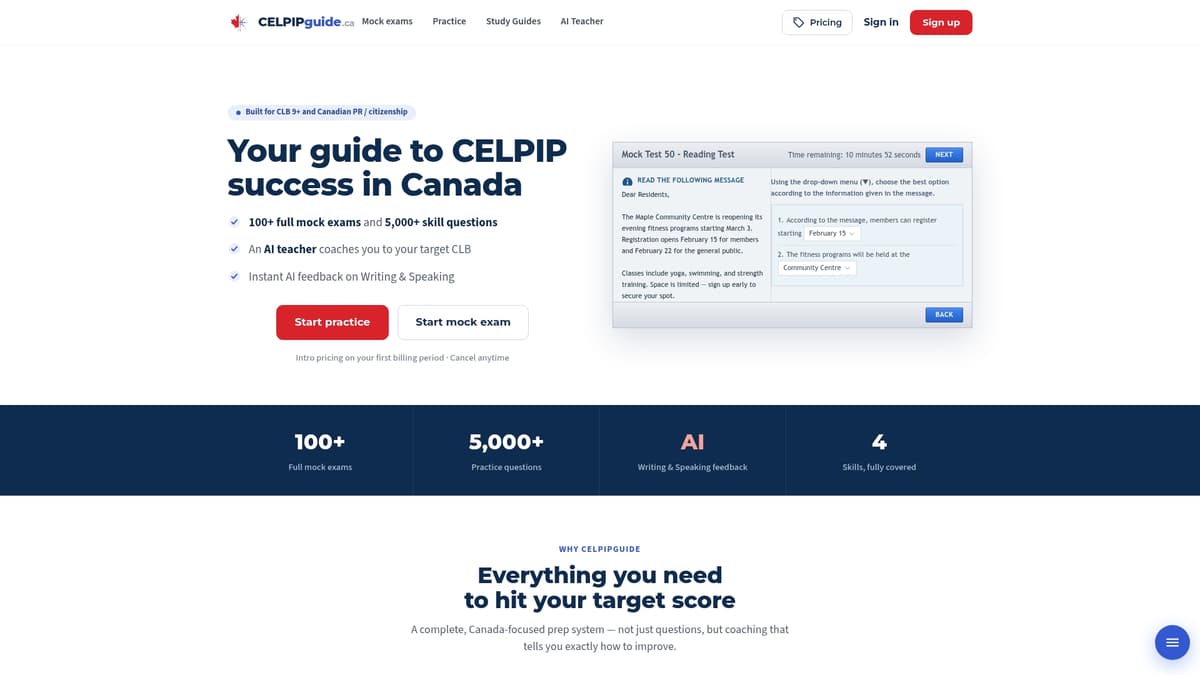
A subscription unlocks full access to mock exams and AI feedback needed to make this shorthand system a habit rather than a one-time read.
- Run a timed mock through the CELPIP plans page to access full mock exams and AI feedback.
- Build a week-by-week schedule with the study plan generator.
- Track your shorthand improvements against practice scores as you go.
Sources
Check the Express Entry language test tables for CLB mapping, or browse sectional listening drills by task type. For group study habits, see this guide to class discussion participation.
FAQ
Can I take notes during a CELPIP listening test?
Yes, note-taking is allowed and expected during the CELPIP listening test, since the audio plays only once and there’s no way to check your memory afterward. Bring your own shorthand system rather than trying to write full sentences in real time.
What is 32 out of 38 in CELPIP listening?
CELPIP listening raw scores convert to CLB levels through official government tables rather than a fixed universal formula, and Canada.ca notes that individual conversions can vary. Check the current official scoring materials for the exact band a given raw score falls into on your test version.
Is it hard to get 7 in CELPIP?
CLB 7 is a mid-range benchmark that many test takers reach with focused, task-specific practice rather than luck, and it’s the level tied to some immigration point thresholds. Consistent shorthand notes and timed single-play drills tend to close the gap faster than casual listening practice alone.
How to pass CELPIP listening test?
There’s no single pass or fail line since CELPIP reports a CLB-mapped score rather than a pass or fail result, so the real goal is hitting the CLB level your application needs. Build a fast shorthand system, drill each task format under timed conditions, and check your raw scores against the official CLB mapping as you go.