
CELPIP Blog
Why Canada's credential bodies accept CELPIP scores
Why Canada’s credential bodies accept CELPIP scores

Yes: Immigration, Refugees and Citizenship Canada (IRCC) and most Canadian regulatory colleges accept CELPIP because it maps directly to the Canadian Language Benchmarks (CLB), gets maintained by Paragon Testing Enterprises under a documented service agreement, and offers regulators a secure way to check your results. That’s the whole answer in one breath. The details matter more, though, especially if you are chasing a licence, not just a visa.
- IRCC designation: CELPIP-General satisfies the language requirement for Express Entry and permanent residence.
- CLB alignment: Every score band converts cleanly to a CLB level, the yardstick regulators already use.
- Governance and verification: Paragon trains and qualifies its raters, and its Score & Identity Verification System (SIVS) lets regulators confirm results without paper shuffling.
- The catch: many colleges set their own, tougher cut scores and demand you hit them in one sitting. Always check your specific regulator.
Key Takeaways
CELPIP earns acceptance from IRCC and most Canadian regulators because its CLB-aligned scoring, Paragon’s governance, and SIVS verification give credential bodies a system they can trust and check.
| Point | Details |
|---|---|
| IRCC designation | CELPIP-General satisfies Express Entry and permanent residence language requirements. |
| CLB alignment drives trust | Score bands map directly to CLB levels regulators already use to set thresholds. |
| Regulators set their own bar | Colleges like CPSBC require 9 in each component, achieved in a single sitting. |
| Verification runs through SIVS | Regulators confirm scores directly via Paragon’s system rather than paper certificates. |
| Validity window is two years | Older results typically won’t satisfy a regulator’s credentialling application. |
| Celpipguide targets the gap | Diagnostic testing and AI-driven plans help applicants close specific component shortfalls before a sitting. |
Table of Contents
- Why Canadian credential bodies accept CELPIP
- What makes regulators trust CELPIP scores?
- Which credential bodies accept CELPIP?
- How regulators use your CELPIP score
- How to confirm your regulator accepts CELPIP
- What does the research say about CELPIP’s design?
- Reaching the score your regulator actually requires
- Where to check official CELPIP acceptance
- Sources
- FAQ
Why Canadian credential bodies accept CELPIP
CELPIP recognition isn’t a single stamp of approval. It’s layered, and understanding the layers tells you exactly where your test results will and won’t carry weight.
At the top, IRCC lists CELPIP-General as an approved test alongside IELTS General Training and PTE Core for immigration purposes. That’s the recognition most people search for.
Below that sits a much larger network of professional regulators, and it’s here that things get more interesting for licensed occupations:
- Health regulators such as physiotherapy credentialling bodies list CELPIP among accepted language proof for internationally trained applicants.
- Pharmacy regulators, including the Ontario College of Pharmacists, publish CELPIP cut scores directly in their registration rules.
- Some provinces go further and write CELPIP-General into law. Manitoba’s regulations name it explicitly as a test that regulated professions must accept.
- Universities and employers sometimes accept CELPIP for admissions or hiring, though policies vary by institution.
The pattern holds across sectors: if a body cares about functional English on the job, CELPIP tends to be on its list.
What makes regulators trust CELPIP scores?
Regulators don’t just accept CELPIP because it’s convenient. They accept it because the test was built with their exact use case in mind, and the paperwork backs that up.
Start with CLB alignment. CELPIP’s score bands were designed to correspond directly to the Canadian Language Benchmarks, the framework Canadian regulators and immigration officials already rely on to describe what a person can actually do in English. That shared vocabulary matters. A regulator doesn’t need to translate a foreign scoring scale. It just reads the CLB level.
Test design plays a role too. CELPIP tasks lean on real Canadian scenarios, things like responding to a workplace email, describing an unexpected problem to a colleague, or giving an opinion on a community issue, rather than academic-only prompts. For a licensing body evaluating whether someone can safely communicate with patients or coworkers, that’s a closer match than a purely academic test.
Then there’s governance. Paragon documents its service agreement with the Government of Canada and publishes rater qualifications, including a four-year degree, ESL teaching experience, and specific certification. Raters aren’t picked casually, and that shows up in how consistently scores get applied. Add SIVS for tamper-proof verification, and a regulator gets a full chain of trust: alignment, design, people, and proof.
Pro Tip: If you’re weighing CELPIP against another test for a licensing application, search the regulator’s own policy PDF for the word “CELPIP” rather than relying on a general FAQ page. Regulators often bury the exact wording in registration documents, and that’s where the real cut scores live.
- CLB mapping gives regulators a shared benchmark language.
- Task design mirrors real workplace and social interactions.
- Rater training and Paragon’s federal service agreement back up score credibility.
- SIVS closes the loop with tamper-resistant verification.
Which credential bodies accept CELPIP?
Acceptance isn’t uniform, and that’s the part applicants trip over most often. Some regulators treat CELPIP as one option among several. Others get very specific about which version of the test counts.
Medical licensing bodies are a good example. The College of Physicians and Surgeons of British Columbia (CPSBC) requires CELPIP-General minimum scores of 9 in every component, achieved in a single sitting, with results valid for two years. That’s a much higher bar than the CLB 7 or so most immigration pathways ask for.
Pharmacy colleges follow a similar structure. The Ontario College of Pharmacists sets its own component minima, and those thresholds get updated periodically, so the number you saw last year might not be current. Physiotherapy credentialling agencies frame language proficiency as a public safety requirement, which explains why their cut scores tend to sit on the higher end too.
A few practical patterns show up across almost every regulator:
- Some accept only CELPIP-General; a smaller number specify CELPIP-General LS for particular categories.
- Cut scores and accepted components differ from body to body, even within the same profession across provinces.
- Submission methods vary, some want SIVS access, others want a direct portal upload.
Never assume one regulator’s rules apply to another, even in the same field.
How regulators use your CELPIP score
Passing the test is only step one. What happens to your score afterward depends entirely on the rules of the body you’re applying to, and those rules are usually stricter than you’d expect coming from an immigration mindset.
Component minima are the big one. Many regulators want a specific score, often 9 or 10, in each of the four skills individually, not an average. A strong Speaking score can’t cover for a weak Listening score. This is one of the most common mistakes applicants make, assuming their overall CLB level from an immigration application will satisfy a licensing body when it won’t.
Applicants often assume IRCC minima are sufficient for professional licensing. In practice, many regulators set higher component minima and a strict single-sitting rule, so preparing for regulator thresholds rather than immigration minima avoids rework, according to OCP’s registration guidance.
Single-sitting rules follow the same logic. Regulators like CPSBC will not combine your best Reading score from one test date with your best Writing score from another. Both need to come from the same attempt.
Validity matters too. Two years is the common window for licensing purposes, shorter than some applicants expect after using CELPIP for immigration.
- Component minima are checked individually, not averaged.
- Combined scores across multiple sittings are typically rejected outright.
- Two-year validity is standard for regulatory use of your CELPIP results.
- Verification runs through SIVS or a direct portal share, not scanned certificates.
How to confirm your regulator accepts CELPIP
A short checklist saves weeks of back-and-forth with a registration office. Before you submit anything, find the regulator’s published language policy and read it in full, not the summary. Look specifically for an “accepted tests” list, then check whether CELPIP-General or CELPIP-General LS is named. Note the component minima and any single-sitting language, and record the validity period so you don’t submit a result that’s aged out.
If the body uses SIVS, you’ll need to authorise access or supply your registration number so they can pull results directly from Paragon’s system. Skipping this step is a common cause of application delays.
Pro Tip: When a regulator’s policy wording feels vague, screenshot the page and email the registration office asking for written confirmation of the accepted test and minimum scores. A saved email beats a memory of a webpage that got updated three months later.
- Read the full language policy, not just the FAQ.
- Confirm which CELPIP version and component minima apply.
- Authorise SIVS access or share your registration number early.
- Get ambiguous rules confirmed in writing.
What does the research say about CELPIP’s design?
CELPIP’s credibility with regulators didn’t happen by accident. It’s backed by published documentation and independent academic review, which is more than most tests preparing candidates can claim.
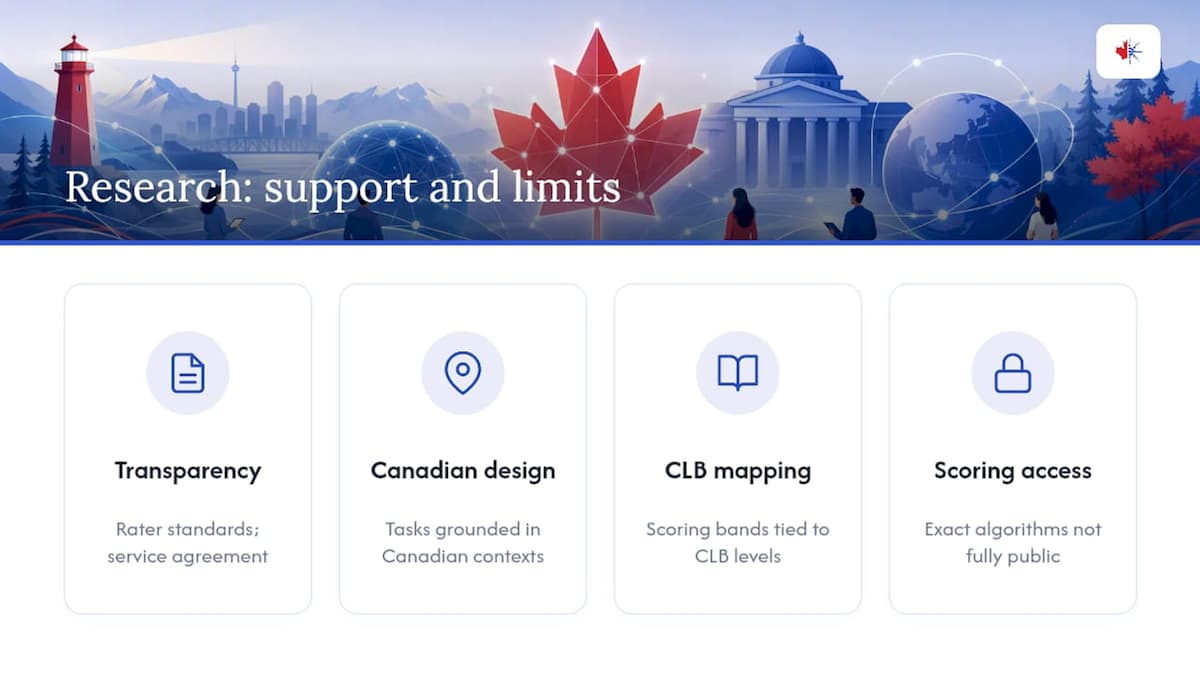
Paragon’s own test report lays out rater qualification standards and the federal service agreement underpinning the test’s operation. That transparency gives regulators something concrete to point to when they justify accepting CELPIP in their own policy documents.
Independent scholarship backs this up from a different angle. A review published in a linguistics journal examines CELPIP’s distinctly Canadian task design and its explicit mapping to CLB levels, noting how the test’s grounding in everyday Canadian contexts, rather than generic academic English, sets it apart from tests built for other markets.
Scholarly reviews describe CELPIP’s Canadian context and skill coverage, and connect its scoring bands directly to CLB levels used across immigration and regulatory settings.
That said, no test is beyond scrutiny. Some academic commentary flags that public transparency around exact scoring algorithms remains limited compared to what researchers can access for older, more established tests. It’s a fair point, and one worth knowing rather than glossing over. The evidence base is solid, not flawless.
What this means if you’re preparing for a licensing application
If you’re chasing a regulator’s cut score rather than an immigration minimum, treat every component as its own test. A 9 in Speaking and a 7 in Writing won’t average out to anything usable if your regulator wants 9 across the board. Authorise SIVS sharing as soon as you register, and plan any retake with enough runway before your application deadline that a single bad sitting doesn’t sink your timeline.

Reaching the score your regulator actually requires
CPSBC wants 9 in every component. Some pharmacy and physiotherapy regulators ask for similarly high, single-sitting scores. Getting there takes more than reviewing what CELPIP looks like. It takes targeted, honest practice on the exact skill dragging your average down.
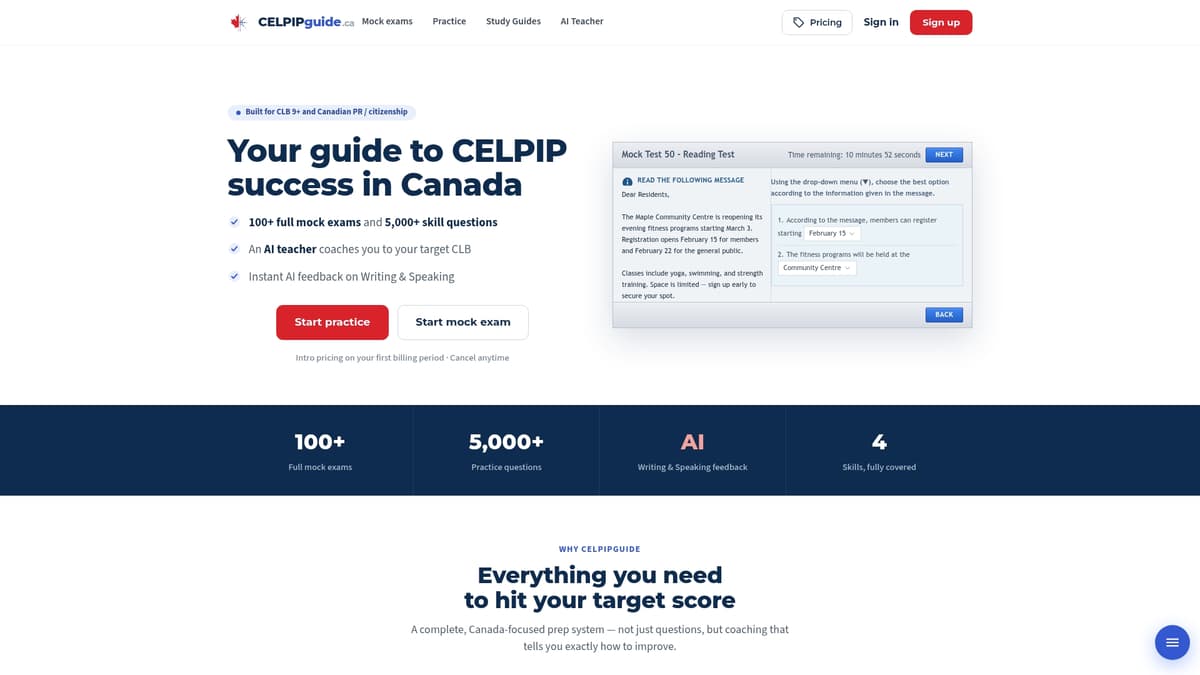
Celpipguide is built around that gap between “acceptable” and “regulator-ready.” Instead of generic review material, you get a diagnostic that flags your weakest component first, then an AI-driven study plan that adjusts as your scores move. Instant feedback on Writing and Speaking tasks matters most here, since those are the two components where applicants most often fall short of a 9 without knowing why. With over 100 full mock exams and 5,000 practice questions built around CLB standards, you can rehearse under real conditions before you spend money on an actual sitting.
If you’re staring down a regulator’s cut score and a deadline, start with the CELPIP Readiness Check to see exactly where your components stand, then build a plan around the gap.
Where to check official CELPIP acceptance
Start with primary sources, not secondhand summaries. Check IRCC’s language test page for immigration requirements, then visit your regulator’s own registration policy, such as CPSBC’s language proficiency requirements or OCP’s cut score page, for exact figures.
- IRCC’s Express Entry language test guidance
- Paragon Testing Enterprises’ official CELPIP resources
- Your specific regulator’s published language policy PDF
Save screenshots of anything you rely on, and request written confirmation whenever a policy reads ambiguously.
Sources
- Canada
- Acceptable language proficiency tests and cut scores for applicants – OCP
- CPSBC licensing policy
FAQ
Does IRCC accept CELPIP for permanent residence?
Yes. IRCC lists CELPIP-General as an accepted test for Express Entry and permanent residence applications, alongside IELTS General Training and PTE Core.
Is it hard to get CLB 7 in CELPIP?
CLB 7 is a mid-range benchmark that requires solid, functional English across all four skills, not fluency at a native level. It’s achievable with focused practice on task types like email writing and giving opinions, which is exactly what targeted mock exams train.
Who accepts CELPIP?
IRCC accepts it for immigration, and a wide range of professional regulators, including medical, pharmacy, and physiotherapy credentialling bodies, list it as an acceptable proficiency test, often with their own higher cut scores.
Is CELPIP hard to pass?
Difficulty depends on your target score. Meeting basic immigration minimums is manageable with steady preparation, but hitting a regulator’s cut score of 9 or 10 in every component demands focused, sustained practice on your weakest skills well before your application deadline.
Do I need CELPIP-General or CELPIP-General LS for licensing?
It depends entirely on the regulator. Some bodies accept only CELPIP-General, while others specify CELPIP-General LS for particular registration categories, so always confirm with your specific credentialling body before booking a test date.