
CELPIP Blog
CELPIP listening everyday situations practice guide
CELPIP listening everyday situations practice guide
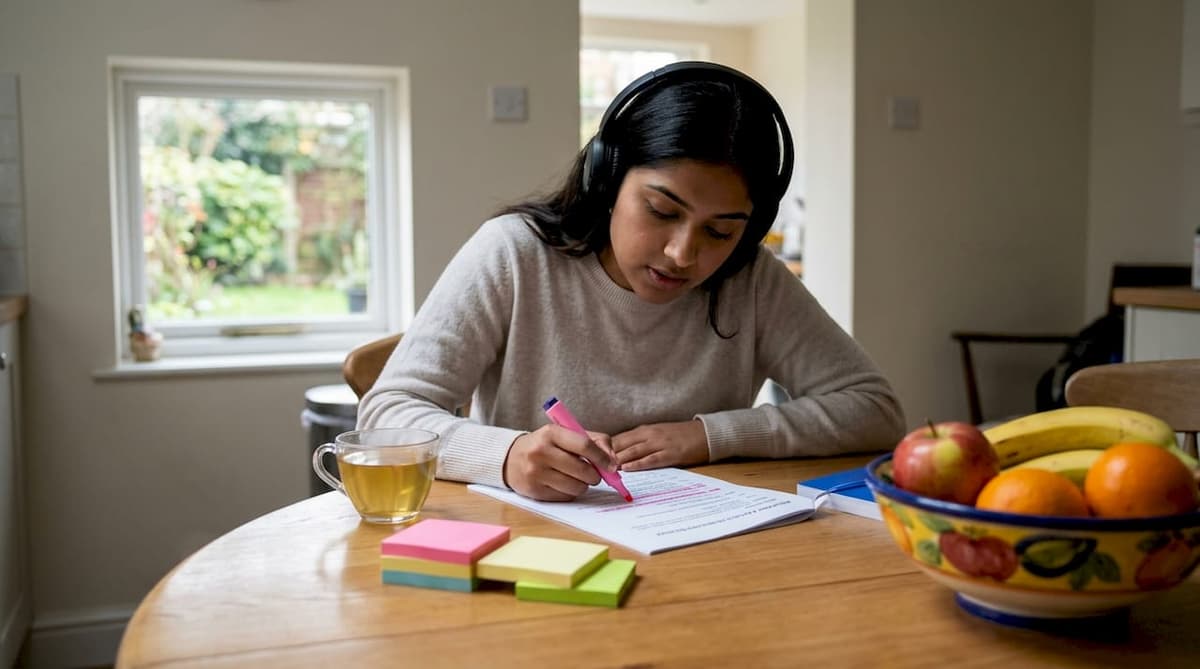
CELPIP listening everyday situations practice is defined as the daily use of interactive techniques, including role-play, shadowing, and scenario drills, to build comprehension and speaking automaticity for the CELPIP exam. The CELPIP exam focuses on functional Canadian English in community and workplace contexts, which means your listening practice must reflect real conversations, not textbook scripts. If you are an international student, immigrant, or newcomer preparing for this test, the gap between passive listening and active response is the single biggest obstacle you will face. This guide gives you a clear, practical system to close that gap.
What is CELPIP listening everyday situations practice and why does it matter?
CELPIP is a fully computer-delivered test that assesses everyday Canadian English in community and workplace settings. That distinction matters. Unlike academic English tests, CELPIP reflects local accents, natural pacing, and the kind of language you hear at a grocery store, a doctor’s office, or a staff meeting. Preparing with formal textbook audio will not get you there.
Canadian English listening practice builds the specific comprehension skills the exam demands. The listening section includes workplace exchanges, news items, and community discussions, all delivered at a natural Canadian pace. Learners who practise with real-life scenarios consistently outperform those who rely on passive audio review alone. The reason is simple: the exam tests active comprehension under time pressure, not just the ability to hear words.

What tools do you need for effective CELPIP listening practice?
The right setup makes daily practice easier to maintain and more productive. You do not need expensive equipment. You need the right combination of tools and a quiet space.
Core equipment
- Headphones: A good pair of over-ear headphones reduces background noise and helps you focus on Canadian English accents and pacing.
- Quiet space: Background noise disrupts active listening. Even a bedroom with the door closed works well.
- Recording device: Your phone’s voice memo app is enough. Recording yourself is one of the most effective feedback tools available.
- Adjustable audio playback: Look for audio resources that let you slow down or speed up playback. Practising at A1 to B2 levels and gradually increasing speed builds processing fluency.
Practice resource types
| Resource type | Best for | Key feature |
|---|---|---|
| AI conversation partners | Role-play and scenario drills | Adaptive pace, instant feedback |
| Scripted audio dialogues | Shadowing and rhythm practice | Controlled pacing, clear accents |
| Full-length mock exams | Timed listening under exam conditions | Realistic format, scored results |
| Self-recording review | Identifying pronunciation and pacing gaps | Personal feedback loop |
AI conversation partners offer scenario-based practice with instant feedback and adaptive speaking pace from A1 to B2 level. That adaptability is what makes them particularly useful for newcomers who are still building confidence in Canadian English.
Pro Tip: Set your audio playback at 90% speed when starting a new scenario. Once you can follow the dialogue comfortably, increase it to 100% or 110% to simulate the natural pace of the CELPIP exam.
How do you practise listening to everyday conversations step by step?
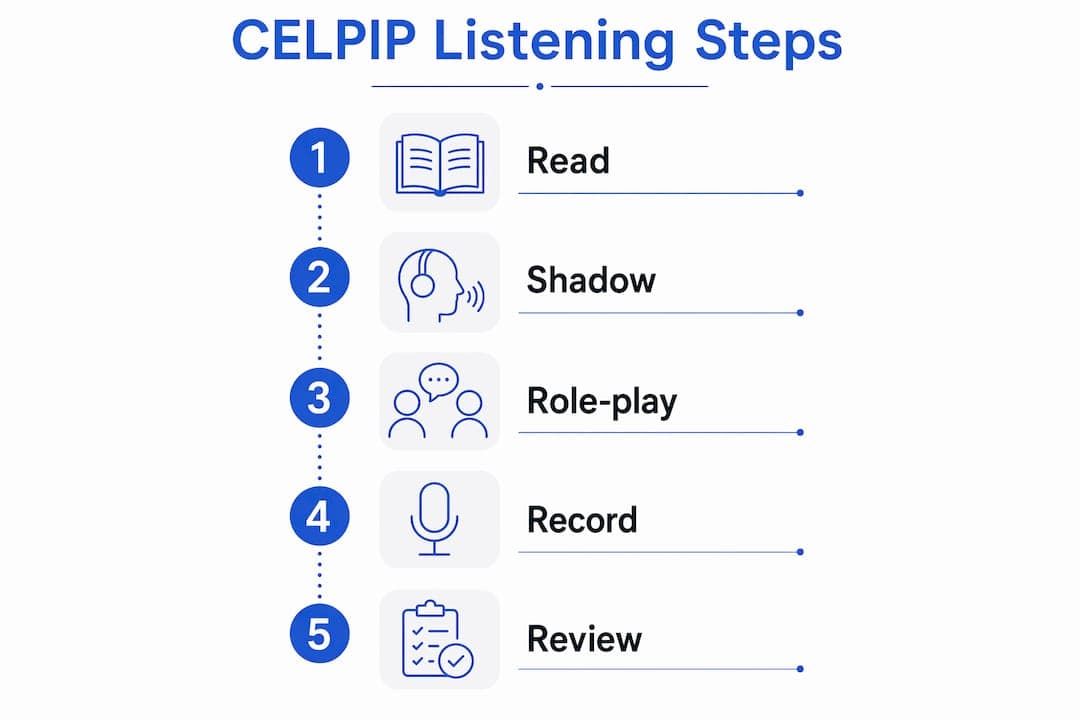
Passive listening, where you simply play audio and hope comprehension improves, does not work for exam preparation. Language educators recommend a cycle of reading, shadowing, and role-play to master everyday English and improve exam performance. This four-step method turns passive exposure into active skill-building.
Step 1: Read the scripted dialogue
Start by reading the dialogue text before you listen. This gives you context for the vocabulary, setting, and speaker intent. For example, if the scenario is a conversation at a Canadian pharmacy, read through the exchange first so you understand what each speaker wants. Context primes your brain to process audio faster.
Step 2: Shadow the audio
Play the audio and repeat each line immediately after the speaker, mimicking rhythm, stress, and tone. Shadowing is not about perfect pronunciation. It is about training your ear and mouth to work together at natural speed. Role-play frameworks that include slow reading, rhythm copying, and acting help learners internalise natural speech patterns in English.
Step 3: Role-play both sides aloud
Switch between both speakers in the dialogue. Say the first speaker’s lines, pause, then say the second speaker’s lines. This builds active recall, which is the ability to produce language quickly without stopping to translate in your head. Speaking out loud during practice engages active recall pathways, which is essential for test conditions with time pressure.
Step 4: Record and review
Record yourself doing the role-play. Play it back and listen for two things: pacing and clarity. Are you rushing? Are your responses clear? Self-recording is an effective feedback loop endorsed by language experts. Most learners are surprised by what they hear. That surprise is productive. It shows you exactly where to focus next.
Pro Tip: Do not review your recording immediately after finishing. Wait 10 minutes, then listen. The short break helps you hear your speech more objectively, the way an examiner would.
What common challenges do learners face in CELPIP listening practice?
Most learners hit the same three walls. Knowing what they are makes them much easier to get through.
- The passive listening trap: Listening to podcasts or TV shows feels productive, but it does not build the active response speed the CELPIP exam requires. You must speak during practice, not just listen.
- Processing speed gaps: Natural Canadian English moves fast. Contractions, reduced vowels, and connected speech patterns can make even simple sentences hard to follow. Practising with audio at varied speeds closes this gap over time.
- Confidence under time pressure: Many learners understand a conversation but freeze when asked to respond quickly. This is an automaticity problem, not a comprehension problem.
“The difference between understanding English and performing in English under exam conditions is consistent, active practice. Comprehension without production is only half the skill.”
Daily drilling of common scenarios develops the automaticity and confidence needed under exam time constraints. The key word is daily. A 30-minute session once a week produces far less progress than a 10-minute session every day. Frequency builds the neural pathways that make language feel automatic.
Scenario variety also matters. Practise conversations set in cafes, airports, workplaces, and medical offices. Each setting introduces different vocabulary and speech patterns. Rotating scenarios prevents the boredom that causes learners to quit before they see results.
How do you build CELPIP listening practice into your daily routine?
Consistency is the single most reliable predictor of improvement in language learning. The challenge is fitting practice into a busy life. The solution is making sessions short enough that skipping them feels harder than doing them.
Experts advise consistent, focused micro-practices of 5–10 minutes daily for sustained language acquisition. That is less time than most people spend scrolling their phones in the morning. Here is how to build it into your day:
- Morning: Do one shadowing exercise with a scripted dialogue before breakfast. Five minutes is enough to activate your listening focus for the day.
- Midday: Use a lunch break to complete one role-play scenario. Cafes, workplaces, and shops are ideal settings because they mirror CELPIP listening section content.
- Evening: Record a short self-response to a listening prompt. Review it before bed. This closes the daily feedback loop.
Scenario variety prevents learner boredom and improves progression in language acquisition. Rotate through at least three different settings each week. Track your sessions in a simple journal or a notes app. Write one sentence after each session: what felt easier than last time. That record becomes your motivation when progress feels slow.
Combining listening with speaking practice tasks accelerates both skills simultaneously. The CELPIP exam tests listening and speaking in connected ways, so practising them together reflects actual exam conditions.
Pro Tip: Set a recurring phone reminder labelled “5-minute CELPIP drill.” Treat it like a meeting you cannot cancel. Habit formation research consistently shows that scheduled micro-sessions outperform longer, irregular study blocks.
Key takeaways
Consistent daily practice using role-play, shadowing, and self-recording is the most direct path to improving your CELPIP listening skills for everyday situations.
| Point | Details |
|---|---|
| Active practice beats passive listening | Role-play and shadowing build the speaking automaticity that passive audio cannot. |
| Four-step method works | Read, shadow, role-play, and record every dialogue for maximum retention. |
| Daily micro-sessions outperform weekly blocks | Five to ten minutes daily produces more progress than one long session per week. |
| Scenario variety sustains progress | Rotating through cafes, workplaces, and medical settings prevents boredom and broadens vocabulary. |
| Self-recording accelerates improvement | Reviewing your own recordings identifies pacing and clarity gaps faster than any other method. |
What I have learned from watching learners prepare for CELPIP listening
I have seen a consistent pattern among learners who improve quickly and those who plateau. The ones who plateau almost always rely on passive listening. They listen to Canadian radio, watch YouTube videos, and feel like they are studying. They are not. They are consuming, which is different.
The learners who improve fast do something uncomfortable. They speak out loud during every practice session. They role-play both sides of a conversation in their kitchen. They record themselves and cringe at the playback. That discomfort is the signal that real learning is happening.
What I find most encouraging is how quickly the gap closes once learners commit to active practice. A newcomer who has been in Canada for six months and practises with real-life scenarios daily will outperform someone who has been here for two years but only listens passively. The exam does not reward time spent in Canada. It rewards deliberate, focused effort.
My honest advice: do not wait until you feel ready to speak out loud. You will never feel ready. Start recording yourself today, even if it sounds terrible. The recording from week four will sound dramatically better than the one from week one, and that progress is what builds the confidence you need on exam day. Pair your daily drills with CELPIP speaking samples to see exactly what fluent responses sound like, then work toward that standard.
— Reza
Where Celpipguide fits into your listening practice plan
Celpipguide is built specifically for CELPIP preparation, which means every practice resource on the platform reflects Canadian English accents, everyday scenarios, and the CLB benchmarks the exam uses to score you.
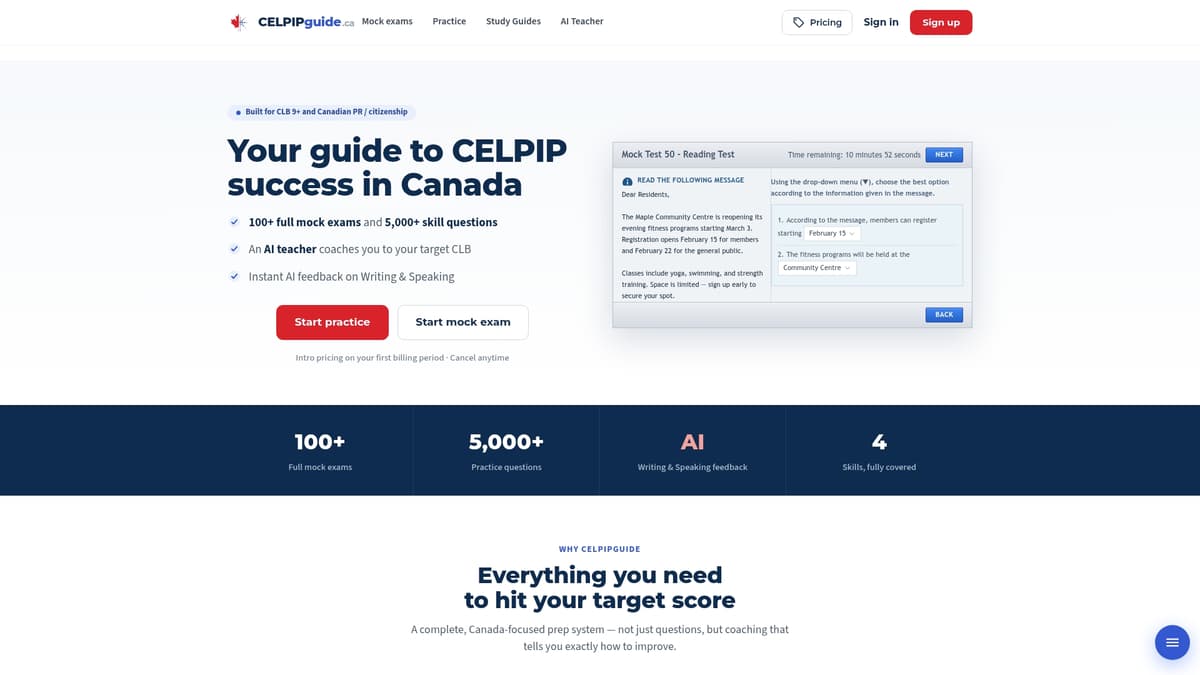
The CELPIP Exam Practice Hub gives you access to over 100 full mock exams and 5,000 practice questions, all aligned with CEFR language standards. The listening section includes skill-specific sample tasks drawn from real-life Canadian contexts, from workplace conversations to community announcements. Celpipguide’s AI teacher personalises your study plan based on a diagnostic test, so you practise the scenarios where you actually need work, not the ones you have already mastered. If you want skill-focused listening tasks that match the exact format of the exam, Celpipguide is the most direct path to get there.
FAQ
What does the CELPIP listening section test?
The CELPIP listening section tests comprehension of everyday Canadian English in community and workplace settings, including discussions, news items, and workplace exchanges.
How long should I practise CELPIP listening each day?
Language experts recommend 5–10 minutes of focused daily practice. Short, consistent sessions build automaticity faster than occasional long study blocks.
Does passive listening to Canadian media help with CELPIP?
Passive listening builds general familiarity but does not develop the active recall needed for the exam. Combine it with role-play and self-recording for real improvement.
What everyday scenarios should I practise for CELPIP listening?
Practise conversations set in cafes, airports, doctor’s offices, workplaces, and shops. These settings reflect the community and professional contexts the CELPIP exam uses.
How does self-recording improve CELPIP listening skills?
Recording yourself during role-play practice reveals pacing and clarity issues you cannot detect in the moment. Reviewing the recording creates a direct feedback loop that accelerates improvement.